
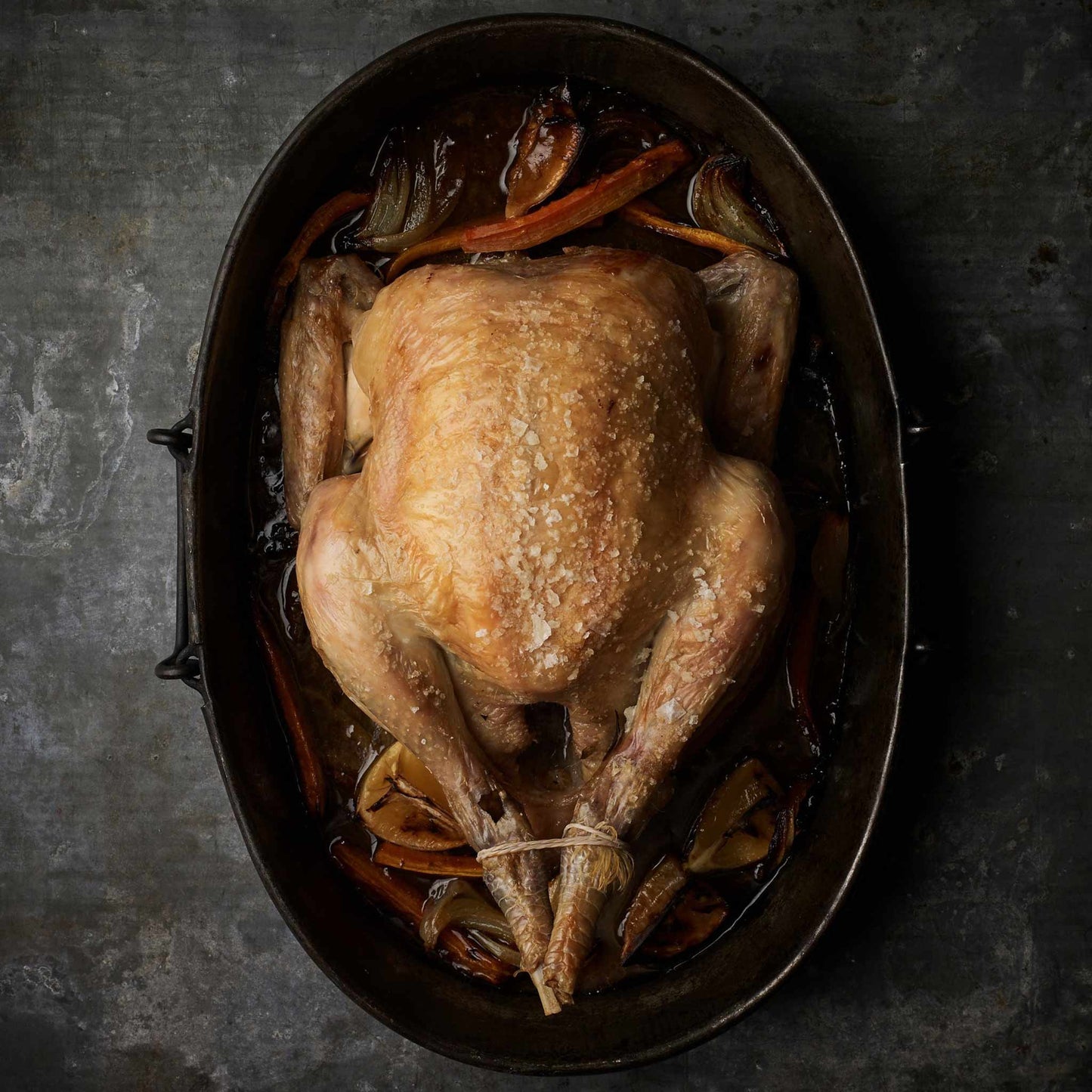
We source our chicken from one farm in Leicestershire. The farm is Pasture for Life certified and rears truly free range, outdoor birds.


Regenerative Produce - What To Look For
This is our guide to low-impact and regenerative produce. It explores what low or positive impact really means in practice, and how to recognise it beyond labels and headlines.
We provide the right questions to ask restaurants, gastropubs, and shops, helping you understand how food is grown, sourced, and produced. Across all food categories, the guide is designed to support more informed choices and encourage conversations that positively move the food system.
Meats

Meats
Regenerative meat is defined less by a single feeding system and more by how animals are managed within a wider ecosystem. Many grazing animals are pasture-fed for much of their lives, playing an active role in improving soil health through thoughtful rotation and rest. In other systems, supplementary feed may be used - but it should be appropriate, traceable, and chosen to support land health rather than maximise yield.
Poultry and pigs are fed natural, balanced diets and are often integrated into rotations where they contribute to soil ecology, nutrient cycling, and biodiversity. In regenerative systems, livestock are managed as part of the land, not separate from it.
When buying regeneratively, ask how animals are fed, where feed comes from, whether soy is used, and how animals are moved across the land. Look for farmers who can clearly explain how their practices build soil, increase biodiversity, and sequester carbon over time. The goal is not perfection, but continuous improvement - creating food systems that regenerate land, support animal welfare, and strengthen local farming communities.
Seafood and Fish

Seafood and Fish
Regenerative principles can apply to certain forms of aquaculture where the focus is on producing seafood in ways that give back to the environment rather than degrade it. Some farming systems cultivate species like seaweed, oysters, mussels, and other shellfish that naturally improve water quality, increase biodiversity, and support healthy aquatic ecosystems.
When choosing seafood, ask where the fish or shellfish was sourced and what practices were used. Responsible suppliers can explain whether their systems minimise external inputs, enhance habitats, and help maintain water health. Look for farms that practise polyculture or restorative methods and can speak to the ecological outcomes of their approach.
For wild-caught species, prioritise fisheries certified to high sustainability standards and those that operate within well-managed ecosystems to ensure long-term abundance and minimal impact. Tools like certification schemes and traceability information help you make informed choices.

Dairy Produce
Regenerative dairy is about how milk, cheese, butter and yoghurt are produced in ways that support healthier soil, biodiversity and long-term ecosystem function. Good regenerative dairy farms focus on improving soil health through practices such as rotational grazing, diverse forage and careful manure management, which can help increase soil organic matter and support nutrient cycling in pastures and fields. This approach prioritises animal welfare and the health of the land, helping create conditions where cows and other dairy animals can express natural behaviours and contribute to a functioning pasture ecosystem rather than simply being managed for maximum output. When choosing dairy, ask producers about their farming practices, how they work with their land, and what steps they take to restore soil and plant life. Look for farmers who can explain how their methods improve biodiversity, sequester carbon in the soil and reduce reliance on synthetic inputs, and how these practices are measured on farm. Regenerative dairy systems may vary by region and soil type, but the shared goal is to produce dairy that nourishes people while building stronger, healthier landscapes. Farmonaut+1

Grains, Seeds and Pulses
Regeneratively produced crops are grown with methods that protect and build soil health, biodiversity and long-term resilience rather than deplete them. Farmers working in this way minimise soil disturbance and avoid synthetic chemical inputs, instead using practices such as cover cropping, crop rotation and living roots in the soil year-round to support nutrient cycling and soil structure. These approaches help sustain a diverse community of plants, insects and microorganisms above and below the ground.
When choosing plant-based foods, ask how the crops were grown, what practices are used to maintain soil cover, and how biodiversity is supported on the farm. Producers who practise regenerative agriculture can explain how they work with local climate and soils rather than trying to override them with inputs. The goal is to produce food that nourishes people while building healthier soils, capturing carbon and supporting thriving ecosystems.

Vegetables and fruit
Regeneratively grown vegetables and fruit come from farming systems designed to build soil fertility, increase biodiversity and strengthen natural resilience over time. Farmers use practices that stimulate plant growth while increasing soil carbon, including minimal or zero tillage, diverse crop rotations and keeping living roots in the soil for as long as possible.
Cover crops, compost and well-managed animal manures are used to restore the plant and soil microbiome, supporting healthier plants and more resilient soils. These methods encourage a greater diversity of insects, plants and microorganisms, while helping soils store carbon naturally.
When buying vegetables and fruit, ask how the soil is cared for, whether cover crops are used, and how farmers reduce disturbance and chemical inputs. Regenerative growers can explain how their practices work with local conditions to improve soil health, biodiversity and long-term productivity.

Oils and Fat
Regeneratively produced oils and fats come from crops grown with a focus on soil health, biodiversity and long-term land resilience. Farmers minimise soil disturbance and reduce or avoid chemical inputs, instead keeping soils covered with living plants for as much of the year as possible to protect structure and fertility.
In some systems, animals are thoughtfully integrated to help manage weeds and pests, reducing reliance on external inputs while supporting natural nutrient cycles. Companion planting and diverse crop rotations are used to restore soil biology and increase carbon storage.
When choosing oils and fats, ask how the crops were grown, how soil health is maintained, and whether biodiversity is actively supported on the farm. Regenerative producers can explain how their practices rebuild soil, improve ecosystem balance and produce oils that reflect the health of the land they come from.